Shift reportReviews
- Filed
- By
- NeonRepute
- Reading
- 7 min
Review velocity vs quality: why a steady trickle beats a burst
A venue with 400 reviews from two years ago can look less trustworthy than one with 60 from this season. What guests weigh in 2026, why bursts backfire, and how to keep a steady flow without breaking platform rules.
The short version
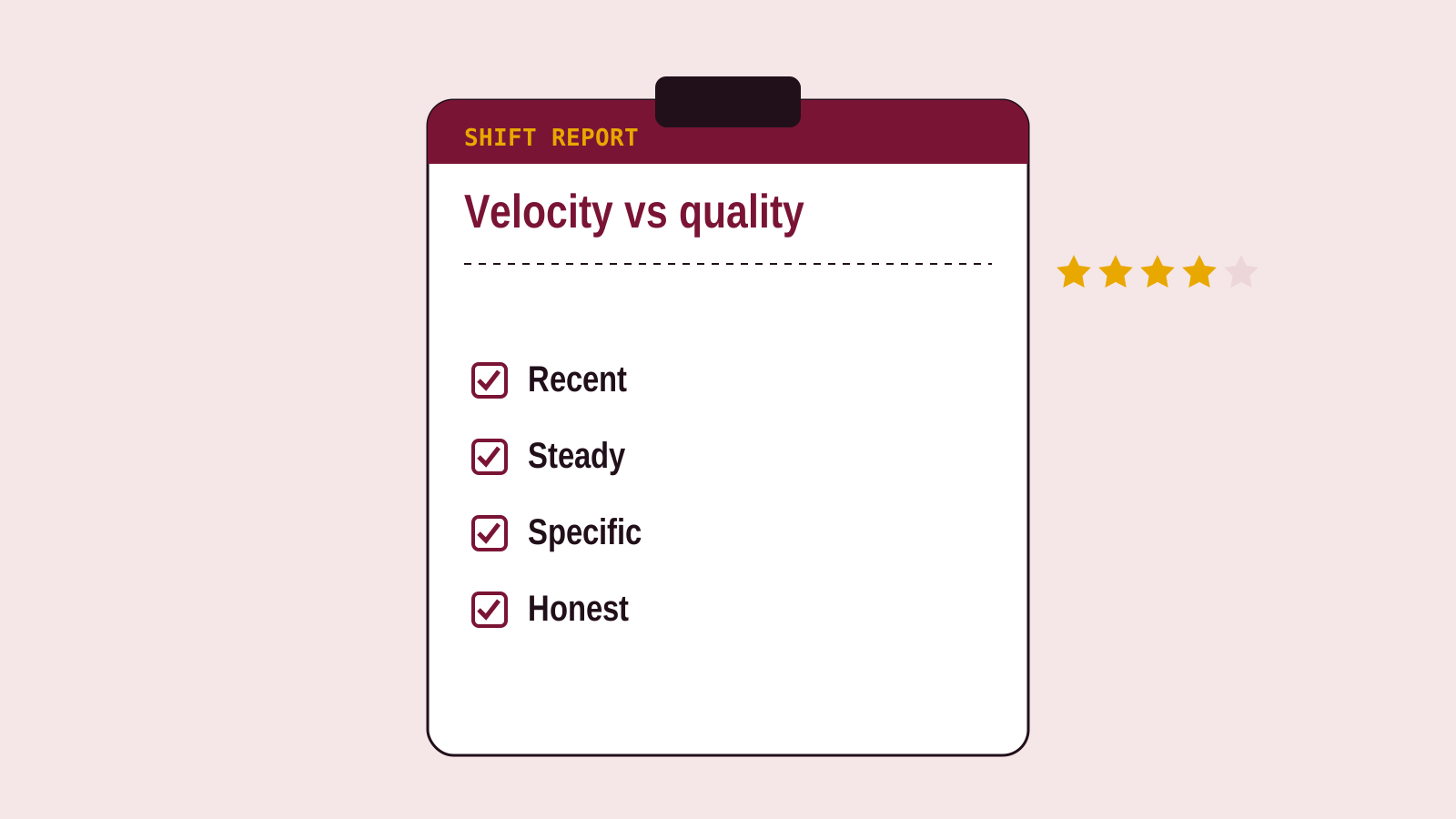
Guests trust reviews that are recent, consistent and specific. A large pile of old reviews does less than it used to, and a sudden burst of new ones can look manufactured. The goal is a steady trickle of honest reviews, collected in a way every platform accepts.
What guests weigh in 2026
BrightLocal's Local Consumer Review Survey 2026 shows how much the bar has moved:
- 74% only care about reviews written in the last three months.
- 47% will not use a business with fewer than 20 reviews.
- 31% will only use a business rated 4.5 stars or higher.
- The most important single factor was a review being backed up by other reviews with a similar sentiment, chosen by 56%.
Read together, these point one way. Count and rating open the door; recency and consistency decide whether a guest walks through it.
Why bursts backfire
A venue that goes quiet for months and then collects dozens of reviews in a week creates exactly the pattern platforms are built to question. Filters may hold reviews back, and guests can notice when a wall of five-star reviews all arrived at once. A burst driven by a promotion also invites the kind of incentive that the FTC's review rule and platform policies prohibit.
Steady is safer, and it keeps the three-month window full.
What a quality review looks like
Quality is not the star rating. It is detail a future guest can use: which night, which room, how long the line was, whether the music matched the listing. Specific reviews answer questions before they are asked, and they are harder to dismiss as fake.
You cannot write that detail for guests, and you must not. You can make it easier to give, by asking at the right moment and by replying to reviews in a way that shows detail is noticed.
A steady flow, within the rules
- Ask everyone the same way. A card with the bill, a line in booking confirmation emails, or a small sign by the exit. On Google, never ask only the guests who seemed happy.
- Offer nothing in return. No drinks, no discounts, no entry perks.
- Respect Yelp's rule. Yelp's guidelines tell owners not to solicit reviews in any form, so leave Yelp out of every request.
- Reply often. Regular replies show guests that what they write is read.
The platform rules behind each step are laid out on our review management page.
Measuring it
Track three numbers each month: new reviews in the last 90 days, the average rating of those recent reviews, and how many mention something specific. If the first falls, the flow needs attention; if the second falls, the venue does. Monitoring that data is part of brand monitoring, and costs are on our pricing page.
Guest asks, venue replies
Guest asksHow many reviews a month is enough?
Venue repliesThere is no fixed number. What matters is that recent reviews keep appearing, month after month, at a pace that matches how many guests you actually serve.
Guest asksIs it worth replying to five-star reviews?
Venue repliesYes, briefly and specifically. It shows the venue is paying attention, and a specific reply can highlight what other guests should expect.
Guest asksCan we ask for reviews on Yelp at all?
Venue repliesYelp asks businesses not to request reviews. You can mention that you are on Yelp, but not ask guests to review you there. Google allows asking, if you ask everyone the same way and offer nothing in return.