Shift reportSearch
- Filed
- By
- NeonRepute
- Reading
- 6 min
Nightlife brand search reputation: what a guest sees when they search your venue
Nightlife brand search reputation starts before a guest reads a single review: they see your venue name in a search result, a profile, a set of photos and, more and more often, an AI summary. Each piece can be right or quietly wrong. How to check them, in order.
The first impression is not a review
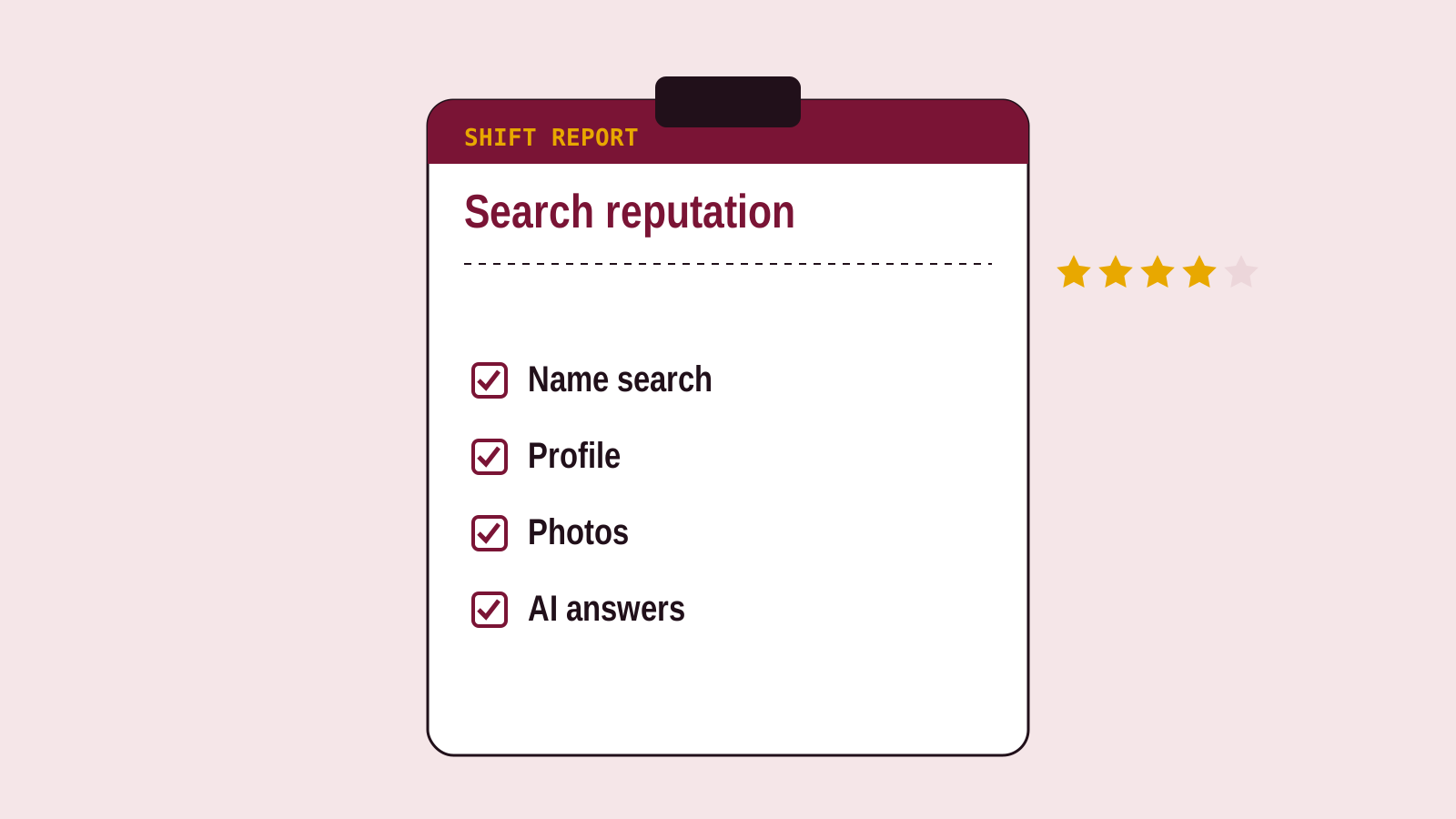
When someone hears about your bar or club, they type the name. What comes back is a small collection of things you only partly control: the business profile with its hours, photos and rating, your website, review sites, a news story or two, social accounts, and more often now an AI summary. A guest forms a view in seconds, often before opening a single review.
That collection is your venue's search reputation. It is worth checking in the same order a guest sees it.
1. The business profile
For most venues this is the biggest block on the page. Check it weekly:
- Hours, including late nights, special events and holiday closures. Wrong hours send guests to a locked door and produce angry reviews.
- Category and attributes, such as bar, nightclub or lounge, and details like age policy, dress code or accessibility where the platform offers them.
- Suggested edits. Anyone can propose changes to a profile, and some are applied without the owner's approval. Correct wrong edits quickly.
2. Photos
Many guests look closely at photos other guests have posted, especially the most recent ones. A profile whose latest photos are two years old, or show an empty room at noon, sets the wrong expectation. Add your own current photos of the room on a real night, the bar, the entrance and anything that sets the venue apart. Report only photos that break the platform's rules.
3. Review sites and the rating
The rating shown next to your name is usually the one guests remember. Keep the flow of recent, honest reviews steady and reply to them, as set out in our guide to review velocity and quality.
4. News, social and forums
A local news story about an incident can sit near the top of a venue search for years. It cannot be removed if it is accurate, but it can be answered: a clear statement on your own site about what changed, and newer coverage of events and improvements that give searchers a fuller picture. Public Reddit and forum threads work the same way. Keeping watch on these is part of brand monitoring.
5. AI answers
BrightLocal's 2026 survey found 45% of consumers used AI tools for local business recommendations. Ask two or three assistants simple questions about your venue each month: what is it like, what are the hours, is it safe. Where an answer is wrong, it usually repeats a wrong source. Fix the source, then check again.
This guide is about the venue's own name. If you also run a brand whose founders appear in search, their reputation is a different job with different tools.
A monthly search check
Once a month, from a private browser window: search the venue name, the name with "reviews", and the name with your city. Screenshot the first page, open the profile, read the latest photos and reviews, and ask the AI questions. Compare with last month. If you would rather hand it over, this check is part of our Reply and Recovery packages; see pricing.
When another business shares your name
Many bars share common names with venues in other cities or with unrelated businesses. Searchers may see the wrong reviews or the wrong news. Use the full name with the neighborhood or city in your profile, website title and social handles, and make sure your profile has complete, consistent details. Over time, search engines connect the right results to your venue.
Old and duplicate listings
Venues that moved, rebranded or reopened often leave behind duplicate listings with old reviews and wrong hours. Find them by searching the old name and address, then mark them as closed or merge them through the platform's process. Duplicates confuse guests and split reviews between pages.
Listings worth claiming
| Listing | Why |
|---|---|
| Google Business Profile | The largest block on the first page |
| Apple Maps and Bing | Guests using other devices and assistants |
| Yelp and Tripadvisor | Frequent review sources for nightlife |
| Ticketing and event sites | Where event reviews and dates appear |
| Local nightlife guides | Trusted by visitors planning a night out |
The website as the anchor
The venue's own website should rank first for its name and answer the questions guests search: hours, location, dress code, entry, accessibility, events and safety. A clear website gives search engines and AI assistants accurate information to use, and it is the one page entirely under the venue's control.
Questions guests search
Beyond the name, guests search questions such as whether a venue is safe, what the dress code is, whether there is a cover charge and how late it stays open. Answer each on the website in plain words. If an old incident appears when people search whether the venue is safe, accurate safety information on your own pages helps balance what they see.
A worked example
Hypothetically. A club that rebranded two years ago still shows its old name's listing, with a one-star average from a bad year, alongside its new profile. The team merges the old listing, adds the neighborhood to the new name, publishes a clear FAQ on the website and keeps asking every guest for reviews. Within three months, searches show one profile, a recent rating and the website first. Monitoring is covered in reputation monitoring.
Photos you control
Upload your own photos regularly: the entrance by day and night, the bar, the room set up for a typical night, accessible entrances and staff in uniform. Keep them current and honest. Guests compare your photos with those posted by other guests; a large gap between them erodes trust.
Events and seasonal pages
Searches for the venue rise before big nights. Publish event details on the website and profile well ahead, with dates, prices, entry rules and accessibility. Guests who find clear information before the night are less likely to leave confused or angry reviews after it.
Local press and the first page
Positive local coverage, such as a feature on a new menu, a charity night or a long-serving bartender, can rank for the venue's name and balance older news. Invite local reporters to genuine stories when they happen, and keep a press page on the website linking to coverage.
Read next
Ongoing monitoring of the venue name is covered in reputation monitoring, and incidents in the recovery plan.
The upshot
Search the venue's name monthly from a clean browser, claim and correct every listing, merge duplicates, keep your website as the anchor, answer the questions guests search, and keep reviews flowing. Fake reviews are covered in fake review response strategy.
Sources
Go to the source for detail. Summaries here are general information, not advice.
Guest asks, venue replies
Guest asksSomeone changed our hours on Google. How?
Venue repliesAnyone can suggest edits to a business profile, and some are applied automatically. Check the profile weekly, keep hours current yourself, and correct wrong edits as soon as you see them.
Guest asksShould we remove guest photos we do not like?
Venue repliesYou can report photos that break the platform rules, such as ones that are offensive or not of your venue. Honest photos of a busy night usually stay; the better answer is adding current, accurate photos of your own.
Guest asksHow do we change what AI assistants say about us?
Venue repliesCorrect the sources they draw on: your profile, your website and the main listings. Then check again next month. There is no form that edits an AI answer directly.